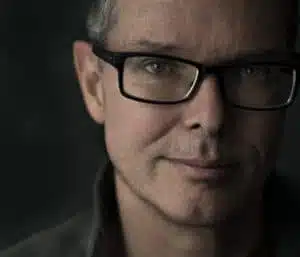
by Frans Stiene
Within Okuden Reiki II we have the symbol/mantra Hon Sha Ze Sho Nen 本者是正念.

Hon Sha Ze Sho Nen can be literally translated as: my original nature is right mind/thought.
First of all, it points to our original nature, our True Self. This means Mikao Usui was pointing us toward embodying our True Self. Or in other words, Hon Sha Ze Sho Nen points to anshin ritsumei, enlightenment, remembering our True Self, our original nature.
Second, it points to the Right Mind/Thought. But what does that mean from a traditional Japanese perspective?
Right Mind or Thought means that we do not get caught up in our thoughts. So many times we create elaborate stories in our own minds. Let’s investigate this a little deeper.
“Shō 正, however, can also be understood as “stopping at one,” since the character is formed from the two characters one (一) and stop (止).” – Deepest Practice, Deepest Wisdom by Kosho Uchiyama.
The famous Zen master Kosho Uchiyama explains Sho as “stopping at one.”
Thus Hon Sha Ze Sho Nen really means that when we have rediscovered our original nature we stop at one thought.
However if we start our training within Mikao Usui’s teachings we can already work with this “stopping at one” concept, we don’t have to wait until we rediscover our original nature. Like if we want to drive a car we do not wait until we have our license to start practicing; we practice driving beforehand.
So what does it mean, “stopping at one”? It means that when we have our first thought we don’t create a whole story around it. In a way it is that simple. And yet it also is so complicated.
If we investigate clearly with a pure mind, we can start to see that one thought comes and then we create a whole story around that thought. But what might happen if we just let this one thought come and don’t create a story around it—stopping at one thought? Then we start to feel more free and spacious and this in turn frees up our energy. Normally we waste our energy on these stories we create from that one thought. One thought becomes a thousand that just circle and chase each other around, creating clouds in our mind and energy…
“Acceptance means letting the story go.” – Skymind – The Radical Path of Open Awareness by Charlotte Rotterdam and Pieter Oosthuizen.
Let me give you an example. Imagine you wake up and look out of the window and see rain. Now you have the first thought: rain. If we stop right there it is fine, then the next thought will come along, like toilet or coffee. But if we are not stopping at this one thought of rain and create a whole story around it like: “I do not like the rain, now it is going to be a bad day”, “I was going for a walk with my dog but what now?” And suddenly we start to feel angry or worried, because we are caught up in our story.
“Without any story, ride the waves of emotion without needing to make anything specific happen. You’re not trying to figure anything out.” – Skymind – The Radical Path of Open Awareness by Charlotte Rotterdam and Pieter Oosthuizen
This is the same when we perform hands-on/off healing on ourselves and others. When we get caught up in what we feel, see or experience we create a whole story around it. “This is good energy or that is bad energy and needs to be removed,” etc… But if we are just “stopping at one” thought, then we do not get caught up in this and because of that we stay wide open and when we are wide open, not caught up in stories, our energy flows freely.
“Let go freely.” When we relax, there’s an element of surrender. Ultimately we surrender into all-pervasive awareness, our all-good wakeful nature that is always present. In order to do that during meditation, we have to initially let go of the powerful urge to make meaning and tell stories about everything we perceive and ultimately of our deeply conditioned patterns of contraction, and this is usually not so easy. As soon as you find yourself going into story telling or meaning-making, relinquish that, let it go, and just come back to purely perceiving.” – Skymind – The Radical Path of Open Awareness by Charlotte Rotterdam and Pieter Oosthuizen
Thus by including Hon Sha Ze Sho Nen in his teachings, Mikao Usui instructed us in a very crucial element: stopping at one thought and not creating stories around this one thought.
So our practice is first of all focusing on the meditation practice of joshin kokyu ho. Why? So that our mind becomes still and because of this stillness we can start to see how often we do not stop at this one thought—how often we create intricate stories around this one thought. And the more we notice those creations of stories the more we can train ourselves to stop at this one thought. What freedom! Imagine what we miss when we get caught up in thought-stories!
“We miss the raw truth and magic of the moment, instead projecting a story onto it, a preference based on preexisting beliefs, hopes, fears, or resistance.”” – Skymind – The Radical Path of Open Awareness by Charlotte Rotterdam and Pieter Oosthuizen
Now imagine what happens when we are “stopping at one” thought in our daily life, today. We will get less angry and worried, we start to feel more grateful and true to our way and our being, and we develop compassion which does not change according to circumstances for ourselves and others.
Therefore Hon Sha Ze Sho Nen is interlinked with the Reiki precepts. And when we embody the Reiki precepts in all we do today, our energy is not constricted by anger and worry; rather it is free to flow, flow directly into everything we do today.
“At an everyday level, the direct way is an invitation to drop our story.” – Skymind – The Radical Path of Open Awareness by Charlotte Rotterdam and Pieter Oosthuizen
For more articles about Hon Sha Ze Sho Nen and this concept please click on these links below:
“Drop the Storyline: When triggered, we jump very quickly to an internal narrative of conjecture, justification, or defense: “What if that happens?” “If only I had…” “If only they had…” “Why is this happening?” Or fixing: “What can I do about it?” When we go into story, we might think we’re engaging with the issue, but we’ve left the vibrant presence of reality for a mental landscape of figments. Acceptance means letting the story go.” – Skymind – The Radical Path of Open Awareness by Charlotte Rotterdam and Pieter Oosthuizen