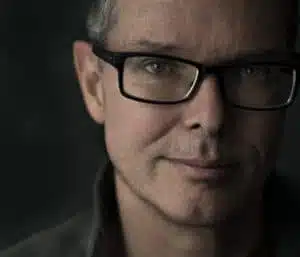
by Karin Åberg

Working with the mantras, symbols, and kotodama in the Shinpiden teachings has opened a very personal and transformative journey for me—one that continues to unfold every day. Although I already practiced Reiki for many years before entering this level, the depth and subtlety of these practices have affected my understanding of energy, presence, and my own inner landscape in ways I did not fully expect. The process has felt less like learning something new and more like remembering a language that was always there, waiting to be spoken again.
The symbol and mantra I have worked with the most is Choku Rei. It has become a steady companion—almost like energy gravity. The more I have practiced visualizing the symbol and repeating the mantra, the more I have felt something profound shift in how I relate to my own body and presence. What surprised me most was how strongly the practice helped me sense that I am not my physical body but energy expressing itself through form. That understanding didn’t arise as an idea or concept, but as a direct feeling. When practicing with the Choku Rei, something in me settles downward, widening and deepening at the same time. I become more grounded—not heavy, but stable, like roots naturally extending into stillness.
This grounding has been invaluable during moments of stress or challenge. There have been times on difficult days, or in situations where emotions rise quickly, when I have silently repeated the kotodama for Choku Rei and felt myself return to center almost instantly. It is as if the kotodama reminds my energy field of its natural order, drawing everything back into alignment in a quiet, unforced way. In these moments, “earth energy” becomes not just a teaching but a lived sensation: supportive, present, and reliable.
In contrast, my experiences with Sei He Ki have felt very different. In traditional Japanese Reiki, it is referred to as “balance,” connected with heavenly energy. Working with it has shown me that this is not an abstract idea. The energy of Sei He Ki truly moves upward, expanding, brightening—almost like fire rising toward the sky. This quality is beautiful, but it also requires respect. I have experienced firsthand how working with Sei He Ki without proper grounding can make me feel unrooted, almost as if my awareness lifts away from my physical center. After spending so much time with Choku Rei, though, that ungrounded feeling transformed. Instead of feeling scattered, I could perceive the upward movement more clearly and enjoy it. The symbol now feels like clarity, like a reminder of spaciousness that balances the density of daily life. It has taught me a deep respect for sequence, foundation, and energetic structure.
I also spent some time with the kotodama of Hon Sha Ze Shonen, which had a different feeling altogether. To me, it felt like my heart opened outward, almost like the horizon expanding in all directions. Its energy felt neither upward like Sei He Ki nor downward like Choku Rei—more like a widening spaciousness. There was a sense of connectedness, of being part of something broader.
My weekly practice with Dai Komyo has touched me in a completely different way. It has become the doorway to a kind of serenity I did not know how to access before. Whenever I visualize the symbol and recite its mantra, a softness spreads inside me—light, still, and expansive. It feels like dawn sunlight dissolving the edges of my thoughts. Something shifts in the quality of my mind: the space between thoughts becomes wider, and the thoughts themselves lose their urgency. After practicing with Dai Komyo, it becomes almost effortless to rest in quiet awareness. I don’t need to force the mind to stop; it simply slows down naturally. This has been one of the most precious gifts of the practice, especially in times when my mind feels too full or busy.
Something unexpected—yet surprisingly practical—has emerged from working with all four kotodama. By repeating them consistently, I began to sense the unique energetic “flavor” of each one. It was as if each kotodama awakened a distinct movement in my energy field. What I did not anticipate was how this would help me in everyday, very human situations—like dealing with hot flashes. At this stage in life, they visit me regularly, and they can be quite intense. Working with the different symbols, mantras and kotodamas has helped me be more aware of how to connect to different kinds of energy. I found that when a hot flash came, I could now easily focus on a cooler, more fluid sensation, almost like water moving through the system. Doing that during a hot flash helps me cool down more quickly, almost instantly sometimes, as if my body has learned from the energetic pattern the kotodama evokes. It feels like a practical application of something subtle and ancient.
This leads into another realization: the difference between working with the symbols and mantras versus working with the kotodama alone. Visualizing a symbol requires space, time, and a certain level of focus. It is powerful, but it feels like a dedicated practice. The kotodama, on the other hand, weave seamlessly into daily life. I can repeat them while walking to a meeting, sitting on a bus, or preparing for something stressful. They move with me. And to my surprise, there are moments—sometimes even during formal meditation—when the kotodama feel more powerful than using a symbol and mantra together. The sound vibration, even when repeated silently, carries a directness that goes straight into the body. It is like a pure form of the energy, without shape, but with unmistakable presence.
There is something deeply comforting about being able to access balance, grounding, clarity, or stillness simply by repeating a syllable. It makes the teachings practical in a way that supports everyday life, not just formal practice. I have arrived at meetings more centered, calmed myself during unexpected stress, and reconnected with my body during moments of discomfort simply by letting the kotodama flow naturally in the background of my awareness. That simplicity feels like a blessing.
The combined effect of working with symbols, mantras, and kotodama has been a gradual but unmistakable transformation in how I relate to myself and the world. I feel more grounded, more clear, more connected to subtle energy, and more aware of my own inner responses. The practices have taught me not only about energy but about trust—trust in my own perception, trust in the process, and trust in the subtle intelligence that runs beneath everything.
Perhaps what stands out the most is the sense of companionship these practices create. The symbols and kotodama feel like old friends who each bring their own gift: grounding, balance, connection, light. They have helped me walk through daily life with more ease, more awareness, and more spaciousness in my heart. In that way, they continue to shape my life quietly but profoundly—one mantra, one breath, one moment of stillness at a time.