by Frans Stiene
Mikao Usui states something very important in an interview within the Shin-Shin Kaizen Usui Reiki Ryoho Kokai Denju Setsumei and the Usui Reiki Ryoho Hikkei, two booklets handed out by the Usui Reiki Ryoho Gakkai:
“Q. Does Usui Reiki Ryoho only heal illness?A. No. Usui Reiki Ryoho does not only heal illness. Mental illnesses such as agony, weakness, timidity, irresolution, nervousness and other bad habits can be corrected. Then you are able to lead a happy life and heal others with the mind of Kami or Hotoke [Buddha]. That becomes the principal object.”
Here Mikao Usui states that the principal object of his teachings and healing others is the mindset of kami or hotoke.
But what is this mindset of kami or hotoke?
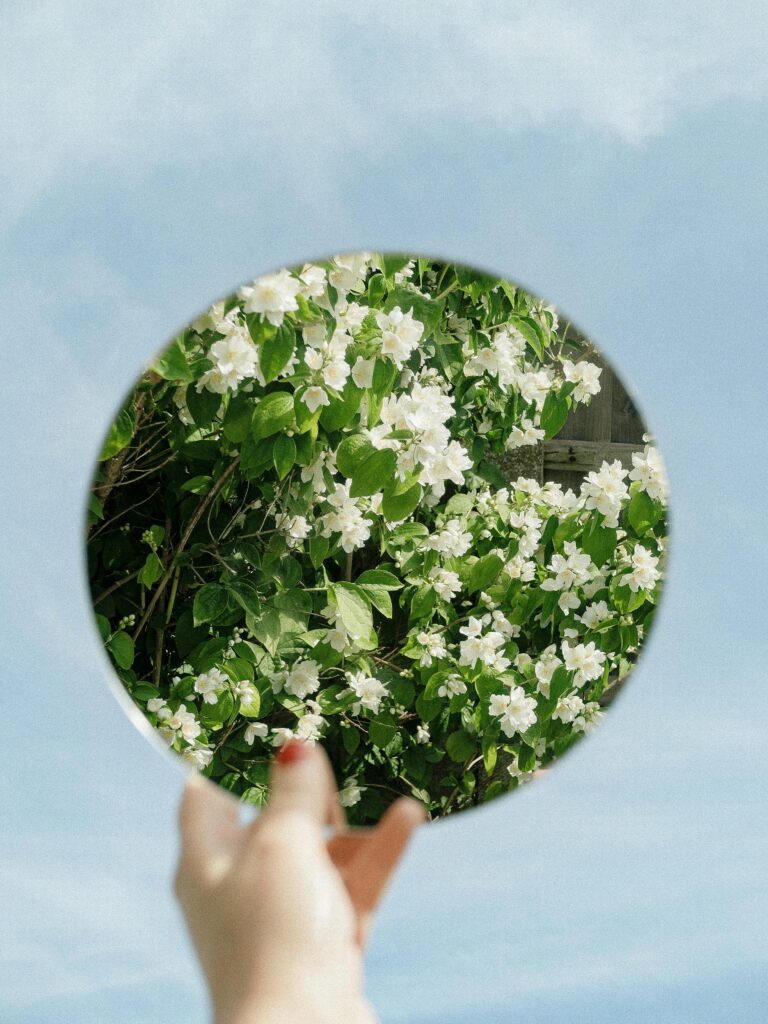
“The word kami derives from kagami, “mirror.”” – Hakuin’s Song of Zazen by Yamada Mumon Roshi.
Thus Mikao Usui points out that we must have the mindset of a mirror while performing hands-on healing on ourselves and others, during our meditations, and ultimately in our daily life.
“There are no tricks or artifice about a mirror. It is mindless and totally impartial. If a flower comes before it, a flower is reflected, and if a bird comes before it, a bird is reflected, both exactly as they are. A mirror reflects all things that come before it without any discriminating whatever; and when they depart, the images vanish without a trace and the mirror returns to the state of emptiness or no-mind. This mirrorlike mind, immaculately pure, free and untrammeled, is called kami. It is also called Buddha.” – Hakuin’s Song of Zazen by Yamada Mumon Roshi.
This means that whatever we experience during our hands on healing, and our meditation practice, we must act like a mirror. Things come and go without any attachments, without discriminating between hot or cold, this or that, sick or healthy, etc…
These are very clear instructions that Mikao Usui left us in his teachings. Yet, we get so distracted by distinguishing things during our hands on healing and life. We all know that the more we distinguish and compare, the angrier and more worried we can become. Therefore, the Reiki precepts also point to that state of mind of being like a mirror.
Mikao Usui not only pointed this state out in an interview or the Reiki precepts, but also throughout his teachings.
The first and second symbols and mantras link to this state of Kami or Buddha nature.
“Mindfulness or right thought is like a mathematical axiom, something that must be obeyed absolutely.” Buddhism, calling this mind the true self-nature and the Great and Perfect Mirror Wisdom,” – Hakuin’s Song of Zazen by Yamada Mumon Roshi.
This state of mind of emptiness, mirror, no-mind is also pointed out within the symbol/mantra hon sha ze sho nen which translates as “my original nature is right thought.” Here Hakuain shows us clearly the link to right thought – shonen to the concept of the mirror, often called mirror wisdom.
“A mind that is pure and undefiled, free of contrivances of any kind, impartial and selfless as a mirror—this is the meaning of kami, and also the meaning of Buddha.” – Hakuin’s Song of Zazen by Yamada Mumon Roshi
This pure mind of kami is also pointed out within the meditation joshin kokyu ho, which literally translates as pure mind with each breath.
“A related Buddhism term, rokkon-shōjō, “purification of the six sense organs,” signifies the mind becoming as undefiled and unclouded as a bright mirror.” – Hakuin’s Song of Zazen by Yamada Mumon Roshi.
Traditionally the reiju has links to the purification of the six sense organs and, therefore, also links to this unclouded bright mirror.
“The true self is as pure and undefiled, selfless and impartial, as a mirror, a state of mind in which self and others are one.” – Hakuin’s Song of Zazen by Yamada Mumon Roshi.
Within this state we also realize that we are all one and already interconnected. We are Reiki, we are the universe in all we do, today.
“Before a mirror, rich and poor, powerful and insignificant, men and women, old and young are all perfectly equal.” – Hakuin’s Song of Zazen by Yamada Mumon Roshi.
In that state everything is perfectly equal and by realizing this, we have a direct experience of the Reiki precepts.
“The mind of the Shintō kami is said to be as pure and undefiled as a mirror, perfectly impartial and selfless, a mind that has penetrated to the infinite. In Buddhism this is called the Great and Perfect Mirror Wisdom (Daien-kyōchi). A mirror is the best symbol for the Shintō kami and for the buddha-mind.” – Hakuin’s Song of Zazen by Yamada Mumon Roshi.
This selfless is also pointed out by a student of Mikao Usui in 1933.
“Its essence is seeking the harmony of body and mind. When engaged in self-cultivation by doing seiza, forgetting the “self” is of utmost importance. When it comes to self-cultivation, one must discard all thoughts.” – Tomita Kaij, Reiki and the Benevolent Art of Healing.
And Tomita Kaji also pointed to the mindset of Kami and Hotoke:
“This merit is not acquired because one worships the kami and buddhas but, rather, because through worshiping the kami and the buddhas, one rectifies the heart-mind [kokoro] and unifies one’s spirit. This is the root of self-cultivation. There are various forms of self-cultivation, but in the end they return to this. Therefore this therapy is a gift, that is, a result, or by-product, of self-cultivation. In this therapy, one maintains a purified heart-mind and brings together the hands, so it is a kind of self-cultivation. In other words, hands-on therapy is learned by actually engaging in self-cultivation.” – Tomita Kaij, Reiki and the Benevolent Art of Healing.
All of this doesn’t mean we have to become Shinto or Buddhist, but it does mean that in order to find from our practice the benefits that Mikao Usui pointed out, to lead a happy and truly compassionate life and to help others to do the same, we must reveal our true nature which is like a mirror.
“Reiki is kami and Hotoke (buddha), though I’m afraid this answer may cause much misunderstanding especially for you westerners. I think we shouldn’t stick to the word too much, which often gets the stumbling block to us.” – Takeda Hakusai Ajari